
A Pro-Growth Agenda Will Require Private-Sector Talent
There is little I am sure of, but I am sure of this: A pro-growth agenda depends on making the government work. One key to making government work is not more money or regulation; it is appropriate engagement of private-sector talent. That means people like you, my friends.
But I know what you are thinking. Why, after watching the recent congressional treatment of two private sector talents, Frank Bisignano, the current commissioner of the Social Security Administration (SSA) and Kevin Warsh, the new Federal Reserve Chairman, would anyone want to subject themselves to that type of torture?
We all know government needs work
Everyone has a horror story regarding government service at all levels. My most recent was last year when I spent several hours on hold with the IRS. Not minutes - hours. When I finally reached someone, I was told it would take four months to process a fax confirming my authority to act on an estate. At any private financial institution - and I spent my career at a few - that is handled while you are on the phone. That inferior experience is not unusual, it is the norm.
Public confidence in government has eroded for a simple reason: performance consistently falls short of what Americans experience in competitive markets. You cannot walk into a post office or a DMV without this becoming obvious. It is not an ideological claim. It is measurable.
Private firms compete on cost, speed, reliability, and customer experience. Government agencies operate with limited competitive pressure, weak feedback loops, and little consequence for failure. The result is predictably inferior service at higher cost.
The performance gap is real
The gap shows up in data and in daily life. Telephone wait times at agencies such as the IRS and the SSA routinely run tens of minutes during peak periods. Independent watchdog testing has documented IRS callers waiting 15 to 80 minutes, even as the agency's own metrics reported much shorter averages. The National Taxpayer Advocate has reported that IRS processing of inbound correspondence averaged multiple months, forcing taxpayers to repeatedly call just to confirm their documents were received.
Federal IT modernization projects routinely run years behind schedule and billions over budget. Comparable private-sector technology projects - often more complex, with tighter security requirements - are delivered faster and cheaper because failure carries real consequences. The American Customer Satisfaction Index, which benchmarks public and private services on the same scale, scores federal government service at approximately 70 out of 100 - well below typical private-sector benchmarks. Fewer than half of Americans report positive experiences with federal agencies. The Veterans Health Administration, the Postal Service, the DMV - the story is the same everywhere you look.
It’s structure, not incompetence
These outcomes are not the result of bad intentions. They are the predictable product of structure.
Government services lack competition. Without the threat of losing customers, performance benchmarks erode and process compliance crowds out results. Leadership turnover compounds the problem. Cabinet secretaries and senior appointees often serve short tenures, selected for political alignment rather than domain expertise. They are expected to manage organizations with budgets and workforces rivaling Fortune 50 companies, often without experience running anything comparable. Pay, promotion, and tenure are weakly tied to service quality. Failure rarely carries personal consequence.
There is one thing that can change this, and it is not a new law or a bigger budget. It is talent. Specifically, experienced private-sector operators who know how to run large, complex organizations - who have done it, who have the scar tissue, and who are willing to take on the thankless work of turning around institutions that have never had to compete for anything.
What Frank Bisignano walked into
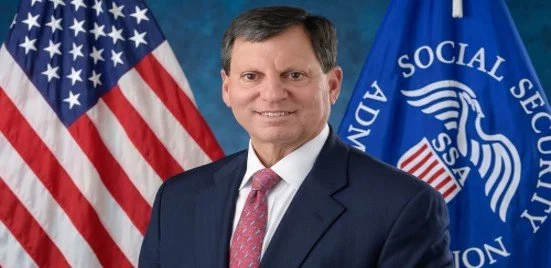
Frank Bisignano, who I worked with at Citigroup, is that kind of person. Before becoming commissioner of SSA in 2025, he spent four decades running some of the largest transaction-processing organizations in the world. He was co-Chief Operating Officer at JPMorgan Chase, held senior roles at Citigroup, transformed First Data from a legacy payment processor into a technology company and led its $2.6 billion IPO in 2015. He then architected its merger with Fiserv - the world's largest financial services technology company - and ran the combined operation as CEO. At Fiserv, he oversaw the processing of more than 850 million transactions daily, touching virtually every American household.
At a recent House Ways and Means Subcommittee hearing on the SSA, Bisignano attempted to give an update on his progress, much as he might have given to his board. He shared that when he arrived he found an agency that had had four leaders in five months and was answering just half its calls. What he said he intended to build is worth quoting directly, because this kind of language is almost never heard in a government context: he wanted to create "a digital-first agency that meets and exceeds customers' expectations for timely, accurate service in the channel of their choice."
Customers' expectations. Channel of their choice. These are not government phrases. They are the language of someone who has spent a career being held accountable for whether people actually got served.
His early diagnosis was equally direct: “We had way too many layers of management. We didn't shut down anything that was facing clients. Regional offices were another level of bureaucracy. We actually reallocated our staff to where the work was. That is a basic tactic. I'd like to make this more complicated but it's not. It's putting people where the work is. It's building technology in a modern fashion. It's understanding what best in class looks like. It's motivating a workforce…” He then provided an update on the improvement he had achieved during his first year across several critical customer-service metrics.
That is the language of a serious operator. Basic, practical, unglamorous, and exactly what the government needs.
The response?
Partisanship and inexperience prevailed. Because Bisignano is the appointee of a Republican President, the Republicans were supportive and appreciative (perhaps too much so). In contrast, and equally predictably, the Democrats were performative and juvenile.
The tone was set by Representative Larson, the Ranking Member. First, he used much of his time to lament that nothing was being done about the coming insolvency of SSA, none of which is the purview of Bisignano.
He then pivoted to ask “Do you believe billionaires should pay their fair share of Social Security?” Bisignano’s response: “I believe that whatever the law is should be upheld.”
Larson: “So if Elon Musk doesn’t pay anything in Social Security tax, you’re ok with that?” Bisignano tried to explain that addressing this policy was the job of Congress, not his, but Larson would have none of it.
Even better was when he complained about the inadequacy of benefits for low-income people and linked it to Bisignano’s efforts to make the agency more efficient. He said that low-income beneficiaries do not benefit from greater efficiency and then did an insulting imitation: “Look what we’ve done for you, we’re getting you that check more efficiently, isn’t that wonderful?” Once again, this isn’t the commissioner’s job. It is Larson’s and he should do it.
There were also those who quibbled over Bisignano’s statistics representing improvement. Fair enough. But here is the more important point: you cannot fix the SSA in one year. No one can. An organization of that scale - 60,000 employees, 70 million beneficiaries, decades of deferred investment in systems and staff - does not turn around in 12 months. What you can do in one year is set direction, change culture, and start moving the right numbers in the right direction. By any honest read, that is what is happening. The question Congress should be asking is whether the trajectory is right, not whether the transformation is complete. To expect otherwise, again, shows a lack of experience.
Kevin Warsh, same story
Two months earlier, a nearly identical dynamic played out in the Senate Banking Committee when Kevin Warsh appeared for his confirmation hearing as Federal Reserve Chairman.
Warsh is as qualified for that role as Bisignano is for his. He served on the Federal Reserve Board during the financial crisis, has spent years studying monetary policy, and walked into his hearing having already said something that took genuine courage: "Inflation is a choice, and the Fed must take responsibility for it." In four words, he told the truth about what caused the inflation of 2021 to 2023 - excessive money creation by the Federal Reserve - and accepted accountability for preventing a repeat. Something we, to this day, never got from Chairman Powell.
That statement should have been the starting point for a serious hearing. It was not. Ranking Member Senator Warren questioned whether funds in his financial disclosure had ties to Jeffrey Epstein, whose name appeared alongside Warsh's on a Christmas party invitation list. He has not been accused of any wrongdoing. Asking whether he is somehow still doing business with a dead man is not oversight. It is theater.
Other senators asked whether Trump lost in 2020, thereby asking the nominee, whose confirmation was inevitable, to engage in a political discussion (not his purview) and irritate his new boss. Many of them used their time to criticize administration economic policy - as if the nominee's qualification should depend on the president who nominated him.
The serious questions - his view of rules-based monetary policy, the size of the Fed's balance sheet, his approach to banking regulation - went largely unasked. Kevin Warsh will be in his role long after Trump has exited. We need him to be successful. The world needs him to be successful as the steward of the global reserve currency. Why not engage in a serious discussion? Perhaps they simply don’t know how.
Both sides are equally guilty
While I have used Democratic Party examples here, the Republicans are no better when the tables are turned. Both let partisanship corrupt the conversation. I would even argue that the supportiveness of the Republicans in this case is not entirely productive. Why not dig harder into the real issues in a productive way?
Congressman Smith said what we are all thinking
During the hearing, Congressman Smith of Kansas got to the heart of the problem.
Speaking to Bisignano, he said “You could be doing a lot of things and you have chosen to serve the people who are relying on Social Security and the people of this country. I just want to say thank you. You don't hear that a lot. Especially when you come before Congress. They like to criticize you and tell you how x, y, and z is not perfect and why you haven’t fixed whatever.”
“I’ve been here 12 years - 12 years on this committee. But that is a short time compared to a lot of people who have been here 30 and 40 years. And the last time Social Security benefits were changed was 1983. But boy, we hear a lot of people up here talking about changing those benefits. You’re right, it’s done by the legislative body, not by you. So, Congress needs to get its act together to address Social Security and the insolvency instead of poking at other people when it is our duty, our responsibility.”
There it is, in a nutshell. And every serious private-sector executive who watches one of these hearings comes away with the same thought: why would I ever do that?
That is not a small cost. It is the reason so many capable people never say yes.
Public trust will only be restored one way - when ordinary citizens begin to have a better experience with the government. Closing the gap between government performance and private-sector performance requires operators who have closed that kind of gap before. Those people exist. Some of them, against the odds, have even said yes. The minimum we owe them is a Congress that treats their service with the seriousness it deserves, asks the questions that actually matter, and leaves the theater at the door. In other words, a Congress of adults.
Talent doesn't have to say yes. Right now, we are making it very easy to say no.
