
The Cuba Embargo: Is it Worth the Human Suffering?
Is our goal of regime change worth the suffering that we are inflicting on an innocent people?
Just 90 miles from our shore, U.S. policy is inflicting horrible pain on the people of Cuba by denying the country the vital oil imports it needs to survive.
Because oil is used to generate electricity on the island, rolling blackouts of twelve to twenty hours a day have become routine. Total collapses of the island’s grid have become frequent occurrences.
Without fuel, ships with food are not unloaded, trucks do not run, refrigeration fails, inventory spoils, irrigation pumps stop, and food harvests cannot be delivered. In April, roughly 170 containers of humanitarian supplies sat undelivered on the island because there was no fuel to move them. Streets are blocked by the accumulation of garbage because gas is not available to fuel the trucks.
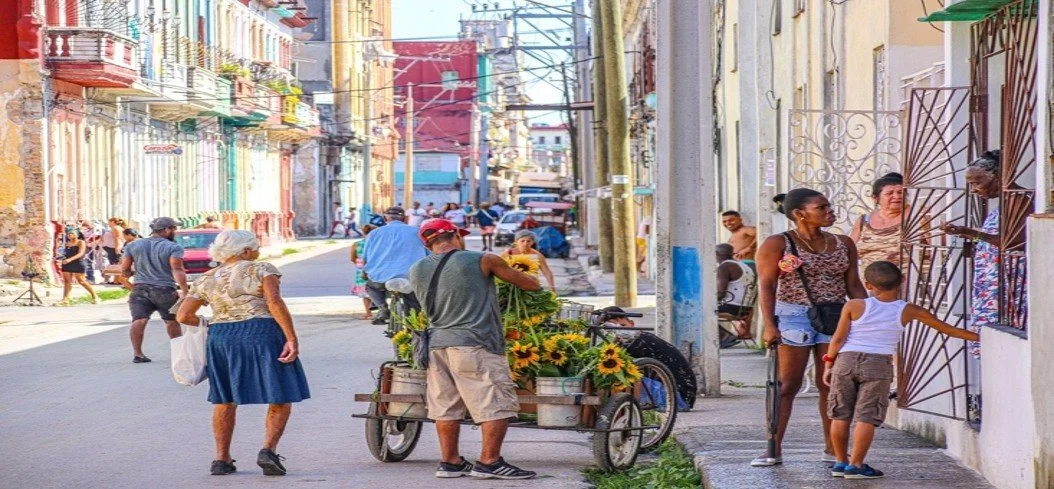
Independent human rights experts reporting to the United Nations found more than 96,000 surgeries pending, including 11,000 for children, and immunization schedules slipping.
All this is happening because the Trump administration is doubling down on the 66-year effort to change the country’s regime.
The United Nations warned in February that humanitarian pressures were growing as the energy shortage compounded existing failures in food security, health care, and emigration, and raised the possibility of a “humanitarian collapse.”
It went on to say that “Energy starvation as a coercive tool is incompatible with international human rights norms.” Take that in; the U.S. is using a “coercive tool incompatible with international human rights norms.”
I’m no fan of the Cuban regime
My first childhood memory of fear was the Cuban missile crisis.
As an adult, I read Armando Valladares’ Against All Hope: his account of 22 years in Castro’s prisons. His crime was opposing the Castro regime.
For years, Havana sent troops and advisers across Latin America and Africa in support of anti-democratic causes. There is nothing about the regime in Havana that I support. Its willful impoverishment and repression of its people is reprehensible to me.
My question, however, is: After 66 years of embargo, what have we accomplished? Is our goal of regime change worth the suffering that we are inflicting on an innocent people?
A bit of history
Our quarrel with the Cuba predates the Cuban Revolution as we first applied economic pressure against the Batista regime in 1958. Following the failed Bay of Pigs invasion, President Kennedy in 1962 signed Proclamation 3447, prohibiting all trade between the U.S. and Cuba. Shortly thereafter, the Treasury Department implemented a ban on travel between Cuba and the U.S.
Since that time there have been several adjustments to the definition and degree of the embargo, including the Helms-Burton Act passed in 1996 which wrote the embargo into statute.
As part of an effort by the Obama administration to improve relations, travel restrictions were lifted, and limited banking and investment permissions were granted. Most of these were reversed by Trump during his first administration, restored by Biden, and reversed again by Trump.
The second Trump administration
In January 2026, Trump issued Executive Order 14380, in which he declared a national emergency and authorized tariffs against any country that sells oil to Cuba. The order states that the Cuban government aligns with and supports Russia, China, Iran, Hamas, and Hezbollah, and that Cuba hosts Russia’s largest overseas signals intelligence facility.
Specifically, the order said “I find that the policies, practices, and actions of the Government of Cuba constitute an unusual and extraordinary threat...to the national security and foreign policy of the United States.”
It goes on to say that “The Government of Cuba has taken extraordinary actions that harm and threaten the United States.”
The result of this action in conjunction with our new influence over Venezuela has been to effectively cut off the supply of oil to Cuba.
Whatever Cuba is, it is not a conventional threat
It is hard to see the administration’s argument. Cuba is a country of 9.4 million people, roughly the size of the Chicago metropolitan area. Its population is in rapid decline as its death rate exceeds the birth rate and net migration was negative last year by 245,000 people.
With respect to the economy, it is difficult to say because there is little verifiable data. Cuba is not a member of the IMF or World Bank, so there is no independent record of its national accounts.
The best independent estimate comes from Mauricio de Miranda, an economist at Pontificia Universidad Javeriana in Cali. He puts Cuban 2025 GDP per capita at roughly $1,100. He also calculates that between 1990 and 2024 the Cuban economy grew by 1.1 percent in total. In other words, not at all.
Another data point is its sugar production. The 2025 sugar harvest produced less sugar than the harvest of 1899.
Tourism, a primary source of foreign exchange, fell from 4.7 million visitors in 2018 to roughly 1.8 million in 2025.
The story of Cuba’s military is similar. Since the support of the Soviet Union ceased in 1991, Cuba’s military has shrunk to a small, home-based, defensive force. It has no ballistic missile program, no strategic air force, and no blue-water navy. What it does have is a small, antiquated, coastal patrol force. Its air defense is built on Soviet systems from the Vietnam era. It has no capacity to project force beyond the island.
Spies, surveillance systems, and China ties
Not surprisingly, Cuba runs intelligence operations against us. Two senior American officials, Ana Belen Montes at the Defense Intelligence Agency and Victor Manuel Rocha at the State Department, spent decades working for Havana before they were caught. The conventional response to this phenomenon is counterintelligence.
At Bejucal, in the hills outside Havana, satellite imagery analyzed by the Center for Strategic and International Studies (CSIS) shows a completed circularly disposed antenna array: 32 antennas in two concentric rings. CSIS reported this June that the array had very likely begun operations. It is the largest of its kind CSIS has documented in Cuba and is believed by some to be operated with help from the Chinese, although this has not been documented. In his executive order, Trump said that Cuba hosted Russia’s largest overseas signals intelligence facility, possibly referring also to Bejucal, but he did not name it explicitly.
Finally, while Trump claims that Cuba is directly involved with Iran, Hamas, and Hezbollah, he has provided no evidence that this is true. If it were true, one would assume that the Treasury would have designated it as such, but it has not.
Further impact of the oil embargo
Once again, there is little official reporting out of Cuba, so we are left with an incomplete picture.
While Cuba’s foreign minister said in August that no fuel tanker had reached the island in eight months, we know that at least one Russian tanker was allowed to make a delivery in March. Trump characterized his approval as being “for humanitarian purposes.” This amount, however, is immaterial to the needs of the country.
What is new in 2026 is the total collapse of the national grid. It has happened six times since January. On July 6 the grid went down at midday, and by late afternoon the state operator could supply only one percent of Havana’s demand. On August 2 it collapsed again, and by the following morning about 23 percent of the capital had power.
Hospitals, water pumping stations, and food production centers receive whatever generation exists. Households are last on the priority list.
Havana’s water supply runs on electric pumps. When the grid goes down, so does the water supply.
The State Department recently committed $100 million in humanitarian assistance through Catholic Relief Services to mitigate the very pressure its policy is designed to create. The first flight in July carried supplies for 700 families. While a nice gesture, 700 families is an immaterial start.
People aren’t always responsible for their leadership
Imagine if you had the misfortune to be born in Cuba. You did not vote for this government. But you suffer today because the wealthiest country in human history, ninety miles away, decided your pain might eventually produce a political outcome it prefers. You are being penalized for the conduct of a government you didn’t choose.
You have endured 66 years of this deprivation, across twelve presidents and two Castros.
If this were you, how would you feel about America?
I know it is challenging to feel for humans who are somewhat of an abstraction to us here in America. But these are not abstract souls living in part of the world remote from the U.S. These are our neighbors who are suffering: 2.7 million people living in the U.S. are either first-generation immigrants from Cuba or are of Cuban descent. Most of them, therefore, have relatives and friends suffering through this deprivation.
We can only try to imagine how we would feel were the conditions reversed.
What if the U.S. inflicted the same pain on Mexico or Canada? Would it matter then? Or what if a U.S. president deprived an American state of critical resources during a natural disaster because he or she didn’t like its governor? Would that matter?
The United Nations General Assembly has voted every year since 1992 to condemn the embargo. The continuation of this policy feels like not only the definition of insanity but also the definition of cruelty, if not immorality.
Maybe it is time to try the carrot rather than the stick.