
Mayor Mamdani, Rent Control, and Multiple Intelligences
Early in my career, my boss interrupted me with a question I will never forget. “How can you be so smart and so stupid at the same time?” While this condition might have perplexed him at the time, thanks to Howard Gardner, author of the book, Frames of Mind: The Theory of Multiple Intelligences, we now know that we all have multiple intelligences. I was indeed smart and stupid at the same time.
In fact, we witness this phenomenon every day: Would you expect the Super Bowl champion to rival JFK in his post-game press conference? Of course not. Athleticism and rhetorical skill are different intelligences. And so on.
Thanks for reading Being anti-Trump is Not Enough! Please subscribe to receive new posts and support my work. Its free!
This is a 6-minute read. In a hurry?Click here for an outline.
The case of Mayor Mamdani
NYC Mayor Mamdani provides a startling example of the possession of brilliance and profound ignorance at the same time. “Brilliant” because no one becomes Mayor of NYC and has his political instincts and rhetorical capacity without an unusual level of intelligence. “Profoundly ignorant,” because he has embraced a policy idea – rent control – that is, to put it in my boss’s words, “stupid”.
Not only do the principles covered in any high school economics course demonstrate why rent control can’t work, but the very history of NYC also provides the real-world case study to prove the theory.
First, however, the economics
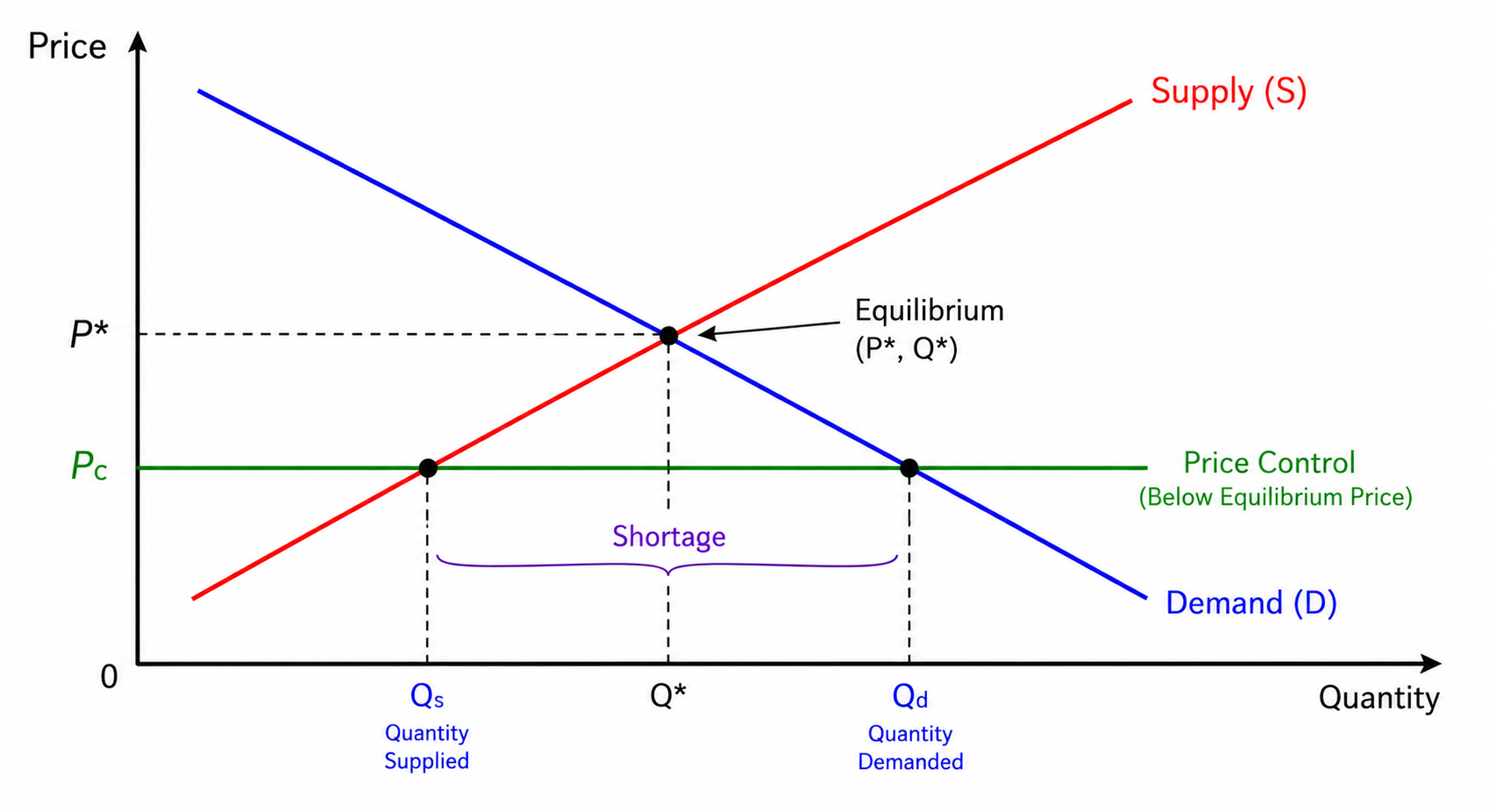
The relationship of supply and demand is a fundamental principle of economics: As price rises, supply rises. As prices fall, supply falls. Demand works in the opposite direction.
Housing is no different than any other product. Limit the price that landlords can charge for apartments and you will get fewer apartments. Rising costs have the same effect. They reduce profits and thereby reduce supply. Do both at the same time and the problem compounds.
And that is exactly what has happened in NYC.
There it is: Econ 101.
Rent control isn’t the only problem
The NYC regulatory environment is also a problem. For projects that require rezoning, the process is punishing with the median rezoning application taking over two and a half years. Add to that the hurdle of 157 Historical Districts, overlapping environmental reviews, and wetland and brownfield limitations and you have a very unattractive place to build.
And now, the real-world result
NYC’s experience with rent control is now more than 80 years old and the results are unambiguous.
It started in 1943 when Washington imposed price controls across the country. When the war ended, the federal controls were lifted and most municipalities followed suit. NYC did not.
The scope of regulation expanded steadily such that by the time Peter Salins of the Manhattan Institute documented the damage in a landmark 1996 study, the regulatory structure had become, in his words, “the most complex and housing-unfriendly development ordinance of any large city”. The consequence was a housing market in a long, slow collapse.
What the numbers show
In the early 1960s, NYC’s private developers were building over 45,000 dwellings a year - more than enough to keep rents competitive. By 1994, total housing development had fallen to roughly 7,500 units a year. Private residential building permits that year numbered just 4,010 - in a city with nearly three million dwelling units.
Salins calculated that NYC needed to add at least 20,000 dwelling units a year just to stay even, given normal housing losses and modest population growth. To improve housing quality and reduce prices, it needed 40,000.
Compare this to Dallas and Houston, where over eight new residential building permits per 1,000 existing dwelling units were issued while NYC issued 1.34.
The modern data show nothing has changed
Fast forward to 2024, when Dallas-Fort Worth issued 71,788 new residential building permits and Houston issued 65,747. Despite having nearly twice the population, NYC issued 57,929.
Why the disparity? Texas cities have limited rent regulation, flexible zoning, predictable permitting timelines, and property tax structures that do not discriminate against multi-family rental housing.
NYC is not failing to build because developers don’t want to build there. It is failing to build because the regulatory structure makes building uneconomic in too many cases.
The apartments themselves
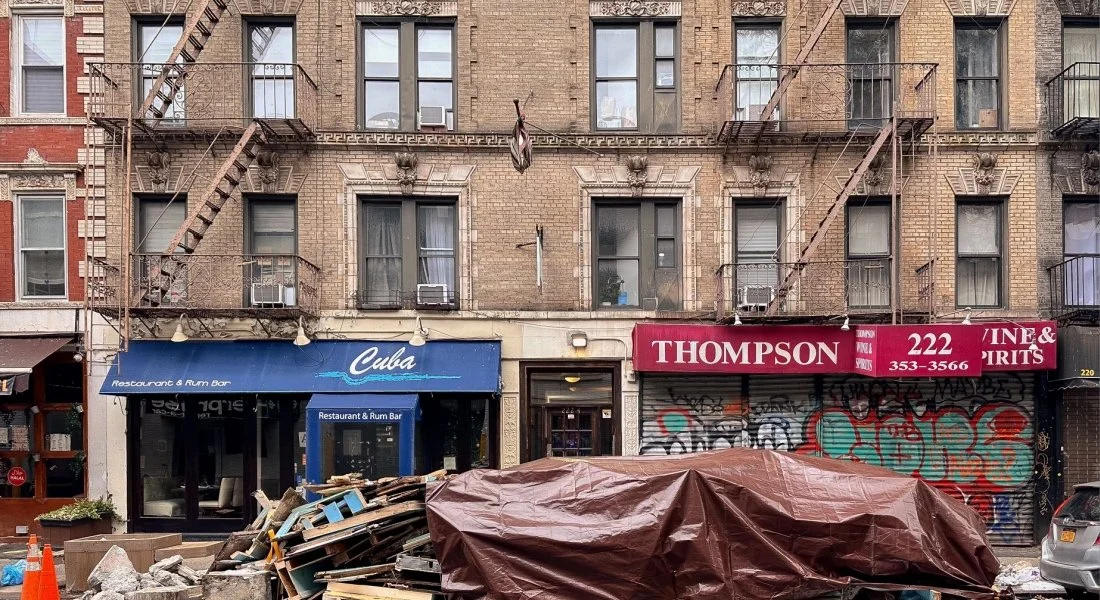
To anyone who lives in NYC, the level of neglect and disrepair of rent stabilized apartments is obvious. Housing subject to rent control has 79% more maintenance deficiencies than market-rate rentals.
In addition, because regulations make the renovation of apartments unprofitable, landlords have chosen to remove an estimated 88,000 rent-stabilized apartments from the market rather than upgrade and re-rent them.
And now Mamdani proposes to double down
Which brings us to the plan released last week: Block by Block: A Housing Plan for a New Era.
The “Era” might be new, but the approach is old. And failed.
The headline is that Mamdani has proposed to build 200,000 new affordable homes and preserve another 200,000 over the next decade, while spending $22 billion in support of the effort over the next five years.
The path to getting there, however, makes little sense, as he is simultaneously expanding the very regulatory system that has created the problem he aspires to fix. He has proposed freezing rents for roughly two million tenants in rent-stabilized apartments and will impose a $40 per hour wage and benefit minimum for workers on any city-financed construction project - as well as require efforts to recruit 30% of workers from high-poverty neighborhoods - raising the cost of every unit the $22 billion is supposed to produce.
Included in the $22 billion is $5.6 billion for addressing the deferred maintenance of the city’s existing public housing stock. That itself is an obvious indictment of what happens when government becomes a landlord and market incentives disappear.
What it gets right
The plan does contain two useful ideas. He proposes to identify unoccupied city-owned property for housing development and create a process for streamlining the permitting process. Both are supply-side, pro-growth tools that make sense.
But it’s not enough
Despite the Mayor’s promotional talent, the laws of supply and demand will not bend to his rhetoric. You cannot freeze rents, extend regulation to more buildings, mandate premium construction wages on subsidized projects, and simultaneously expect private capital to show up and build at scale. The economics do not allow it.
A better answer
Unfortunately, Democrats just can’t understand that a program doesn’t have to be expensive to be effective. Many of our problems are better dealt with by removing obstacles to growth, which is free, rather than creating more spending and more complexity. A pro-growth approach is the better answer. In this case, if done right, the market will respond with the capital required and he can put his $22 billion to work elsewhere. Or better yet, return it to taxpayers.
First, he should phase out all rent regulation. Cambridge, Massachusetts showed it could be done in 1995. The result was that property values rose, maintenance investment surged, and the rental supply expanded.
Secondly, he should attack all related regulation aggressively. He must shorten permitting and environmental review timelines, streamline the land use review, make residential development by-right, and reform the property tax structure that discriminates against multi-family rental housing. NYC’s tax incentives for single-family homes result in wealthy townhome owners paying only 20% of the tax rate paid by multi-unit apartment buildings.
Third, use the $22 billion to lower real estate taxes. Since the expiration of the 421-a Tax Abatement, building permits have dropped dramatically because projects simply don’t pencil out for many developers.
Do these things and capital will follow. It follows in Dallas. It follows in Houston. It follows in Raleigh. It follows everywhere that the regulatory structure allows it to. NYC does not have a shortage of people who want to live there or investors who want to build there. But capital isn’t loyal to geography. It flows, and these days it is flowing to cities that welcome it.
Mayor Mamdani is right that the housing crisis is real, but he is wrong about the cure. Expanding a system that has produced 80 years of documented failure will not produce different results. That is Einstein’s definition of insanity. Block by Block will fail and is a massive unforced error.
We can do better. Howard Gardner knows we can.